
Download the PDFs
- The article: PDF, 17 pages, 4.1 MB
- The full report: PDF, 26 pages, 5.5 MB
- The slide deck: PDF, 23 pages, 1.2 MB
official London tickets went on sale [1]
published last entry in Edinburgh [2]
published end time for that street party [2]
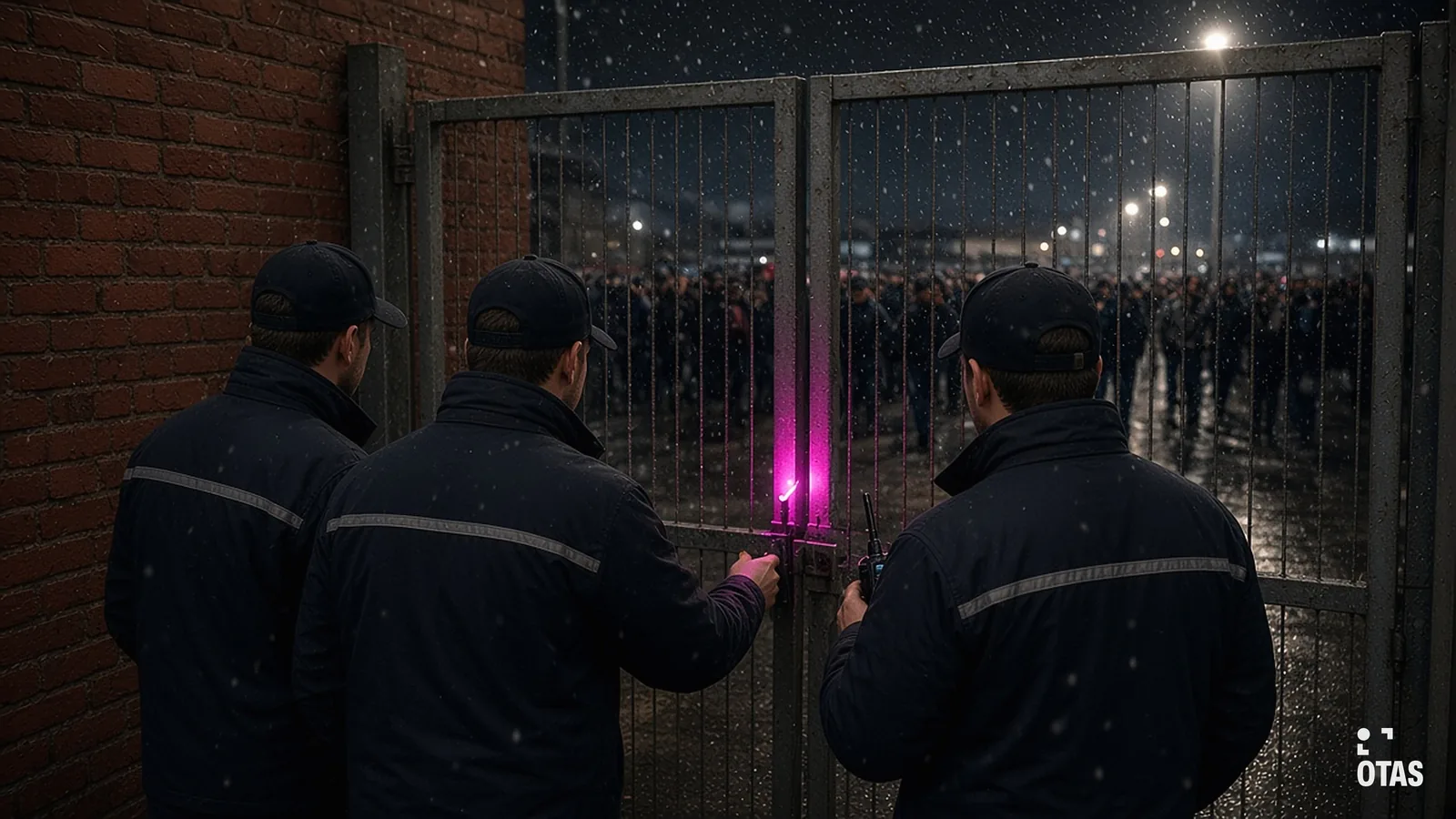
“Specific entry gates may be closed temporarily throughout the event for safety reasons.”
Edinburgh's Hogmanay, Street Party information, on temporary gate closures [2]
By OTAS Insights · Published by OTAS Live Ltd
There is a planning window now, about seven to eight weeks before New Year's Eve. Official tickets for a large London fireworks viewing went on sale on 23 October 2026, for about 100,000 people in ticketed areas, through the official outlet only. City Hall organises the event with support from the Met Police, Transport for London, councils and the emergency services, and has warned that only tickets from the authorised outlet will be accepted [1]. A large all standing street party in Edinburgh publishes that gates open at 20:00 and last entry is 23:00, and that reentry is not allowed. It also says that specific entry gates may be closed temporarily throughout the event for safety reasons. Under 12s are not admitted. Under 16s must be with an adult over 18. People are asked not to bring bags larger than A3. Glass, umbrellas and drones are not allowed. The event is published as ending at about 00:50 [2]. Those published rules are useful because they already name the three problems many local street gatherings will face. Those problems are a last entry time, a temporary gate hold, and people who come without a ticket or arrive too late. This Insight is not about fireworks in the sky, how you evacuate at the end of the night, or what happens when everyone is told to come in at once. Those subjects have their own OTAS Insights, and you should use them alongside this one. This piece is about last entry, the hold, the overflow, and getting a standing winter crowd away after midnight.
In short: a New Year street gathering will not wait for a meeting at 22:30. Before the week of the event, set a last entry time and write the words for a temporary gate hold. Plan for people who gather outside without a ticket. Agree how a standing winter crowd will leave after midnight.
What the large events have already published
Ticket and entry rules, as published [1][2]. We describe events and venues rather than naming them in the text. Some source links carry names. We do not judge any organiser.
A ticketed viewing in London
- Tickets Official tickets went on sale on 23 October 2026, for about 100,000 people, through the official outlet only [1].
- Who runs it City Hall organises the event with support from the Met Police, Transport for London, councils and the emergency services [1]. It has warned that only tickets from the authorised outlet will be accepted [1].
- What this means for others A local street party may not be ticketed. The lesson still holds. You need a way to know who is inside, when you will stop letting people in, and what you will do for everyone else.
An all standing street party in Edinburgh
- Times Gates open at 20:00. Last entry is 23:00. The event is published as ending at about 00:50 [2].
- Holds and reentry Reentry is not allowed. Specific entry gates may be closed temporarily throughout the event for safety reasons [2]. That is a public, planned gate hold, not an improvised one.
- Who may come Under 12s are not admitted. Under 16s must be with an adult over 18 [2]. Many local gatherings will include families. Your plan has to say which of those rules you are using.
- What may not come People are asked not to bring bags larger than A3. Glass, umbrellas and drones are not allowed [2]. Each of those rules has a queue and a conversation at the gate.
What the guidance says, and what this Insight leaves to other pieces
In brief, from HSE, the Purple Guide and health guidance [3] to [22]. Not legal advice. Fireworks, late night evacuation and a rush at opening are covered in other OTAS Insights. This section does not retell them.
Your duty, the crowd and the cold
- The Act. In Great Britain, an employer must conduct the undertaking so that, so far as is reasonably practicable, people who are not employees are not exposed to risks to their health or safety [16]. In OTAS's view, that can include people who gather just outside a ticket line, because your entry plan affects them.
- Northern Ireland. Northern Ireland has its own health and safety law, with a similar duty to people who are not employees [17].
- Incidents and crowds. HSE event guidance covers planning for incidents and emergencies, managing an event, crowd management, and venue and site design [3][13][14][15]. A street you know well is still a site you have to design for the night.
- The Purple Guide. The Purple Guide to Health, Safety and Welfare at Music and Other Events covers event planning, including crowd management and medical cover. Use the edition that applies to your event [18].
- Cold. People standing for hours, and people waiting outside, are in the winter night. NHS advice on hypothermia and the UKHSA Weather Health Alerting System are the starting point, with the OTAS weather Insight for triggers [7][20][12]. In England, UKHSA cold health alerts run from 1 November to 31 March. They do not cover Scotland, Wales or Northern Ireland, so use Met Office warnings there [11][20].
What this piece does not cover
- Fireworks and the sky. Who owns the airspace, the display and the effects above your event is covered in Who Owns the Sky Above Your Event? Use that Insight for fireworks and effects. This piece does not repeat it.
- Leaving at the end of the night. How you evacuate or empty a venue late at night is covered in Evacuating a venue late at night. Use that Insight for the end of night plan. This piece deals only with how a standing street crowd starts to leave after midnight, in the cold, when transport is thinner.
- A rush at opening. What happens when everyone is told to come in at once is covered in When everyone is told to come in at once. This piece is about last entry and holds later in the night, not the first opening surge.
General information from published guidance and law, as of 10 November 2026. Not legal advice. Use the linked Insights for fireworks, late night evacuation and a rush at opening.
Why last entry, the hold and the people outside fail first
OTAS guidance, drawn from the published rules and the official guidance above.
Call last entry before the queue decides it
- Last entry is a process, not a clock time. A 23:00 last entry only works if the last person you will admit is already in a queue you can finish [2]. If bag search, ticket checks or a late bus unloads at 22:50, you need a rule for who is processed and who is turned away.
- A gate hold must be explainable. The Edinburgh public information already says some gates may close temporarily for safety [2]. The same public information also says that if a gate is temporarily closed, people will be directed to the nearest entrance gate on arrival [2]. People at a silent, unexplained hold will push, film, or walk to the next opening. Write the words, name who calls the hold, and say when you will update them.
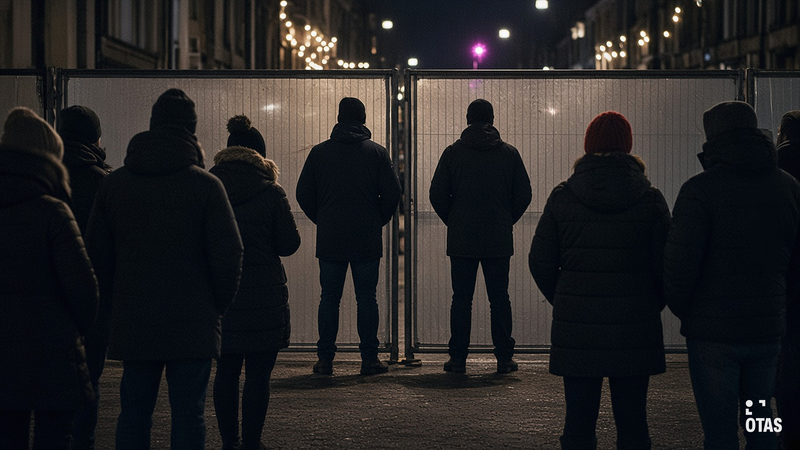
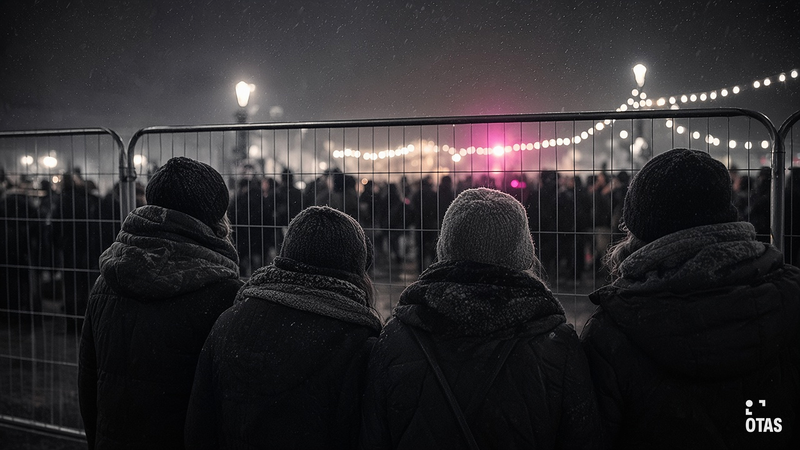
- The people outside are still a crowd. People who have no ticket, who missed last entry, or who came to watch from the street will gather at the fence. They need space, a way along the street, welfare in the cold, and a message. If you ignore them, they become an unplanned standing event against your own perimeter.
- No reentry changes the welfare plan. If people cannot go back in, they must be able to stay in, including toilets, water and a way to find help, or they must be able to leave and get home [2]. That choice belongs in the plan, not at the gate.
- Midnight is not the end. A published end time of about 00:50 [2] is a reminder that dispersal happens after the moment people came for. Transport is thinner. It is cold. Staff have been on since the afternoon. The late night evacuation Insight is the place for the full empty plan. Here, you need a start: a route, a message, and a time when the street should be thin enough to reopen.
Signs your New Year plan will not hold
Each of these is OTAS guidance, drawn from published event rules and HSE guidance.
Signs your New Year plan will not hold
- 01A time with no process
The ticket says last entry 23:00, but there is no rule for the queue that is still standing there [2].
- 02No words for a hold
Gates may need to close for a time, but nobody has written what the people at the gate will hear [2].
- 03No plan outside the fence
The plan ends at the ticket line. People without tickets have no space, no message and no way along the street.
- 04Search queues eat the cut off
Bag search is staffed for a steady flow, not for the last 30 minutes, so last entry is missed.
- 05Midnight has no winter leaving plan
The plan covers the countdown, but not how a standing crowd leaves in the cold when transport is thin [7][20].
Plan last entry, from this week to after midnight
Five stages. OTAS guidance unless a source is shown.
Five stages, from the rules to after midnight
The rules
Decide whether the gathering is ticketed or open, who may come, what may not come in, and whether reentry is allowed [1][2]. Write the last entry time and the end time. Say how this sits with fireworks, which belong in the sky Insight.
Last entry
Turn the last entry time into a process. When do you stop joining the queue? How do you finish the people already in it? How is bag search staffed for the last 30 minutes? Who tells the people who have just arrived?
The hold
Write the words for a temporary gate hold and for reopening that gate [2]. Name who can call it, and how often you will update the people at the gate. Do not leave a closed gate unexplained.
Outside the fence
Plan space, a way along the street, a message and welfare for people without tickets or after last entry. Brief the team that this crowd is part of the event, not a nuisance to be ignored.
After midnight
Set the first leaving message, the first route, and the time when the street should be thinning [2]. Use the late night evacuation Insight for the full empty plan, and the weather Insight for cold and wind [12][21].
Watch, act and hold
OTAS guidance unless a source is shown.
| Situation | Watch | Act | Hold or close |
|---|---|---|---|
| Last entry nearing | Queue still growing, search slowing | Staff the last 30 minutes. Tell people how long it will take | Close the back of the queue at the agreed time, then finish those already in it |
| A gate hold | Density, a medical incident, or a need to slow entry [2] | Named person calls the hold. Give the words and an update time | Reopen only when that person says so, and tell the people at the gate |
| Overflow outside | People without tickets, or after last entry, gather at the fence | Open the overflow route and the welfare point. Give a message | Do not leave them against the perimeter with no information |
| After midnight | The moment has passed, the street is still full [2] | Give the first leaving message and the first route | Do not hold people in a standing street once the plan says they should be moving |
Table 3. Watch, act and hold at last entry and at the gate. OTAS guidance.
Action box
Operational
- Know the cut off
- Use the hold words
- Watch outside too
Know the last entry time, the hold words, and what you may say to people who are turned away. Keep the search moving. Watch the outside of the fence as well as the inside. Follow a hold when it is called.
Tactical
- Staff the last 30 minutes
- Call the hold in time
- Start the leaving message
Staff bag search for the last 30 minutes, not only the average hour. Call or recommend a hold in time. Brief the overflow route and welfare. Start the first leaving message after midnight on the agreed words.
Strategic
- Set the rules
- Plan the overflow
- Agree the first leaving plan
Set the rules, the last entry process, the hold owner, the overflow plan and the first leaving plan [1][2]. Agree them with the police, the highway authority and your safety advisory group. Read this with the sky, evacuation and gate rush Insights.
New Year last entry checklist
OTAS guidance unless a source is shown.
Seven weeks out
- Rules written: tickets or open, age, items, reentry [1][2].
- Last entry process agreed, not only a clock time.
- Gate hold words and owner written [2].
- Overflow plan for people outside the fence.
- First leaving message drafted, with the late night evacuation Insight.
The week of the event
- Search staffing set for the last 30 minutes.
- Overflow route and welfare checked.
- Transport and cold plan checked [7][20].
On the night
- Last entry is called on the process, not on mood.
- Holds are explained.
- The first leaving message goes out after midnight on the agreed words.
What we do not know yet
- The full 2026 and 2027 terms for the London ticketed viewing, beyond the ticket sale report of 23 October [1]. If official terms are republished, we will update this Insight.
- How local street gatherings, which may include families and may not be ticketed, will set age and last entry rules in practice.
- Night transport plans for each city on 31 December 2026, which are often published later in December.
- Whether official public information for other UK city gatherings will add last entry or gate hold wording this year.
Coming up: the last month, local gatherings and the week of the event
The next month is when local authorities, community groups and city events lock times, steward numbers and transport. The plan that works is the one you can explain at 23:00, at a closed gate, and to the people who are still outside in the cold.
Frequently asked questions
What if our gathering is not ticketed?
You still need a last entry rule, or a capacity rule, and a plan for people who keep arriving. Tickets are one way to do that [1]. A count, a wristband or a simple cut off time can also work if you can staff it and explain it.
Should we copy the 23:00 last entry time?
Only if it fits your event, your transport and your search capacity [2]. The lesson is to have a time and a process, not to copy another city's clock.
What do we do with families if a large event bans under 12s?
That is a published rule for one street party [2]. Many local gatherings will include children. Decide your rule, write it in the public information, and plan welfare and a way out for families who need to leave early.
Where do fireworks, evacuation and a rush at opening belong?
In the three live OTAS Insights this piece links to. Do not copy those plans into this one. Use all four together.
Does this replace our risk assessment?
No. This is general information for event professionals. Your own risk assessment, the police and your safety advisory group decide what applies to your gathering.
Related OTAS Insights
These are links to other OTAS Insights pieces, not to any OTAS Live product or service.
- Who Owns the Sky Above Your Event?
- Evacuating a venue late at night
- When everyone is told to come in at once
- When the weather makes the call
Interest: OTAS Live Ltd, which publishes OTAS Insights, sells event operations services, handbooks and training related to this topic.
Law: this Insight summarises HSE and industry guidance and health and safety law in Great Britain as published on 10 November 2026, plus published event information. Northern Ireland has its own health and safety law. It is not legal advice. Use it with the OTAS Insights on the sky, late night evacuation and a rush at opening. Ask the police, the highway authority and your safety advisory group what applies to your gathering.
References
Web sources opened 10 November 2026 and labelled by source type. Links are for checking only. Listing a source does not mean it endorses OTAS or has worked with us.
- BBC News, official tickets go on sale for London New Year's Eve fireworks, 23 October 2026 bbc.com
- Edinburgh's Hogmanay, Street Party information, last entry, gate holds and conditions edwinterfest.com
- HSE, event safety, incidents and emergencies hse.gov.uk
- HSE, first aid legislation hse.gov.uk
- HSE, event safety, outdoor equipment hse.gov.uk
- HSE, first aid needs assessment hse.gov.uk
- NHS, hypothermia nhs.uk
- Resuscitation Council UK, Public access defibrillators: a guide for communities resus.org.uk
- HSE, event safety, worker landing page hse.gov.uk
- HSE, first aid at work, the health and safety (first aid) regulations hse.gov.uk
- Met Office, weather warnings guide metoffice.gov.uk
- OTAS Insight, When the weather makes the call otas.live
- HSE, event safety, managing an event hse.gov.uk
- HSE, event safety, crowd management hse.gov.uk
- HSE, event safety, venue and site design hse.gov.uk
- Health and Safety at Work etc. Act 1974, section 3 legislation.gov.uk
- Health and Safety at Work (Northern Ireland) Order 1978, article 5 legislation.gov.uk
- The Purple Guide (subscription) thepurpleguide.co.uk
- NHS, head injury and concussion nhs.uk
- UKHSA, Weather Health Alerting System gov.uk
- OTAS Insight, Evacuating a venue late at night otas.live
- OTAS Insight, When everyone is told to come in at once otas.live
At your last entry time, what will you do with the people still in the queue, and with the people who have just arrived outside?
If you need support setting last entry, a gate hold and an overflow plan for a New Year street gathering, reach out to us to see how we can support you.
Events industry since 2008, internationally since 2015. OTAS Live Ltd. By OTAS Insights. Edited by Kris Dailly.
Download the PDFs
- The article: PDF, 17 pages, 4.1 MB
- The full report: PDF, 26 pages, 5.5 MB
- The slide deck: PDF, 23 pages, 1.2 MB
Work with OTAS
Planning a New Year street gathering?
Corrections to published Insights articles are listed in our corrections log.