
Download the PDFs
- The article: PDF, 20 pages, 4.2 MB
- The full report: PDF, 28 pages, 5.4 MB
- The slide deck: PDF, 24 pages, 1.7 MB
helicopters on a flyover before the game [1]
still overhead as pyro fired [4][5]
injuries publicly reported [4][5]
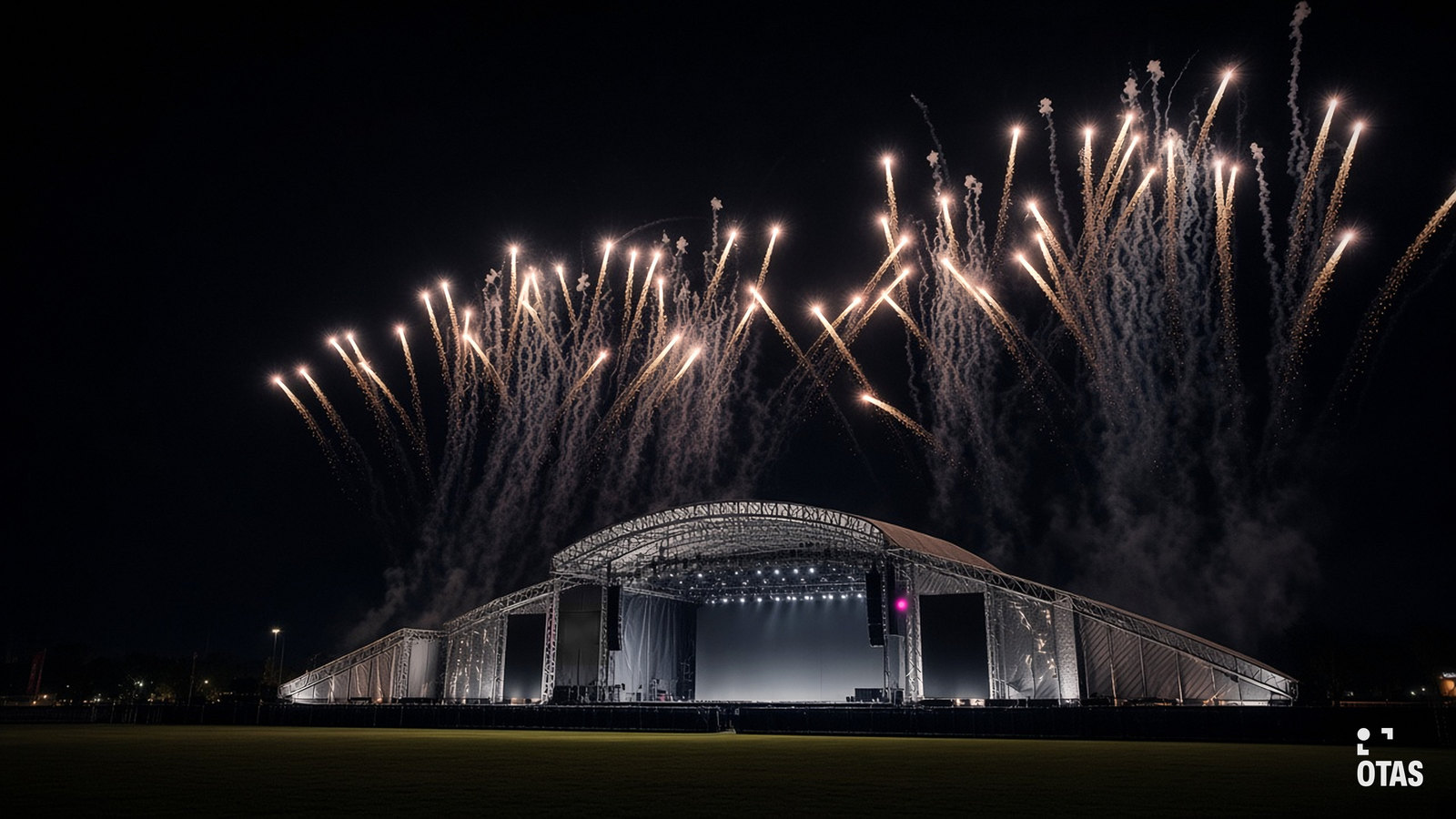
“It is of prime importance that Light (temporary) and Fireworks displays are never directed at or towards aircraft or aerodromes.”
CAA, CAP 736 [9]
Published by OTAS Live Ltd
On Monday 2 November, four US Army Black Hawk helicopters flew over an NFL stadium in Seattle just before kick off [1][2]. The same aircraft had practised the route over the city a week earlier [3]. Media reported that pyrotechnics fired from the stadium while the last of the four helicopters was still overhead [4][5]. Fan videos shared widely online appear to show sparks and smoke very close to it [4][5]. The aircraft held its course and left the area. The game went ahead, and no injuries or damage have been publicly reported [4][5]. As of 3 November, no official account of what happened has been published. This Insight is not about who got it wrong. It is about the gap between two planned moments that use the same sky, and who owns that gap at your event.
In short: when aircraft and effects share an event, airspace rules warn other pilots, but they do not stop your own effects meeting your own aircraft. Put both on one running order, fire effects only when the sky is confirmed clear, and agree that anyone can call hold and one named person releases it.
What was reported
One game, one flyover, as reported [1][2][3][4][5]. We describe the venue and teams rather than naming them in the text. Some source links carry names. We do not say what caused it.
The flyover
- Where An NFL stadium in Seattle, before a Monday night game [1][2].
- Who Four US Army UH 60M Black Hawk helicopters from a nearby military base [1][3].
- When Just before the 17:15 local kick off on 2 November, which was 01:15 UK time on 3 November [2][3].
- Rehearsal A military spokesperson told a local news site that low flights a week earlier were practice for the flyover [3].
The pyro
- What was reported Pyrotechnics fired from the stadium while the last helicopter was still overhead. Fan videos appear to show sparks and smoke very close to the aircraft [4][5].
- Contact Not confirmed. One outlet said contact could not be confirmed from the footage [5]. We describe it as "came very close".
- Afterwards The aircraft held course and left. The game went ahead. No injuries or damage publicly reported [4][5].
What UK rules say about aircraft and effects
In brief, from UK aviation law and CAA guidance [7] to [16], with the rules for pyro on aircraft in the next section. US rules differ and are background only [6]. Not legal advice.
Flying at your event
- A flying display needs CAA permission, applied for by the Flying Display Director [7][8].
- Flypasts and displays by military aircraft only are regulated by the Military Aviation Authority, not by a CAA display permission. The CAA still needs to be told, at least 42 days ahead for events with military aircraft displays [8][30].
- CAA guidance says the event organiser is subordinate to the Flying Display Director on the safety of the flying, and that the Flying Display Director must make sure unsafe displays are stopped [8].
- No VFR flight may be flown below 1,000 ft above the highest obstacle within 600 m over an open air assembly of people, except to take off or land, or with permission [12].
- An aircraft must not land or take off within 1,000 m of an open air assembly of more than 1,000 people [13]. The exceptions are an aerodrome, or a site under CAA procedures with the organiser's written permission [13].
Effects and aircraft together
- Ground pyro at a flying display must be controlled by a competent person appointed by the event organiser in agreement with the Flying Display Director [8].
- Debris must not reach aircraft or spectators. The scale and maximum heights of effects must be known before the event [8].
- Briefings must cover where and when effects fire in relation to the aircraft, plus comms and emergency plans. Every affected display pilot must agree in advance [8].
- Fireworks must never be directed at or towards aircraft. The organiser should name a single Display Operator responsible for the display [9].
- A single civil flyover at an advertised event open to the public counts as a flying display, so these rules apply to it. A flypast by military aircraft only follows the Military Aviation Authority's RA 2335 instead [7][8].
Telling the CAA, and the law
- The CAA asks for at least 7 days' notice of fireworks and lasers, and usually issues a NOTAM to warn pilots [10].
- The CAA says the event sponsor or operator is ultimately responsible for flight safety [10].
- No one may recklessly or negligently act in a way likely to endanger an aircraft or anyone in it [11].
- Drones must never be flown over crowds in the Open Category [14]. Event restrictions of flying can be made under article 239 [15], as in a 2026 festival regulation [16].
Industry firework guidance asks organiser, venue and display company to agree a clear communication path for decisions before and during the show, with stop criteria set in advance [17].
A contrast: aircraft and pyro planned as one show
Aircraft and fireworks can share a show when they are designed, permitted and rehearsed as one act. We describe the event and companies rather than naming them. Some source links carry names.
Planned, permitted, deconflicted
- Where At a major motorsport weekend, the opening and closing ceremonies put aircraft carrying their own fireworks into a drone light show, with lasers and fireworks in the same script [20][21][22].
- Who In 2024 a UK night aerobatic team flew the display [20][21]. In 2025 an air show agency supplied it [23][24]. Which aircraft flew in 2025 is not public.
- One clock The team's flight lead has said every element runs to timecode. Pyro, drones, media and lasers start on one button, and the aircraft, flown by hand, keeps to the same timecode [21].
- Own block of sky Drones fly in one zone, fireworks in another and the aircraft in a safe zone. From the crowd it looks close, but the elements do not share airspace [21].
- The difference There, the aircraft was part of the show, on the show clock, in its own sky. In Seattle, as reported, stadium pyro fired while a separate flyover was overhead [4][5]. How the Seattle cues were set is not known.
UK rules for pyro on aircraft
- Dropping articles from an aircraft is banned unless permitted, under article 89 of the Air Navigation Order 2016. Pyro on an aircraft whose embers or remnants reach the ground needs a CAA permission under that article for each location and each display, practice included [8].
- A ground observer who can talk to the pilot must be in place, unless only PRT 3 pyros are used. The observer can call Pyros Too Close or Pyros Too Low [8].
- A fall out zone must be set and risk assessed for the higher risk pyro tiers. The event organiser countersigns the risk assessment [8].
- Ground pyro launched under the display area should be protected from falling embers from pyro aircraft [8].
- The usual minimum distance between display aircraft and the crowd line is 230 m. It is more for fast aircraft flying towards the crowd and can be less for some light aircraft, with the Flying Display Director's agreement [8].
- Twilight displays usually have higher minima, and display lines may be marked with lights. Evening twilight ends 30 minutes after sunset. Flying after that is night flying, which the pilot and aircraft must be qualified for [8].
- Pyro carried on an aircraft can also fall under the dangerous goods rules made under article 97 of the Air Navigation Order 2016 [27]. Keeping and handling it falls under explosives law, which is the Explosives Regulations 2014 in England, Wales and Scotland [28] and the Explosives Act (Northern Ireland) 1970 in Northern Ireland [29]. Ask the display team which permissions and licences they hold.
What US investigators found
- A night skydiving display with a firework box fitted to the aircraft. The box exploded and the wing caught fire. The approval did not cover night airborne pyro [25].
- A night aerobatic pyro display about 55 minutes after twilight. Investigators said glare from the lead aircraft's pyro may have impeded the pilot's vision [26].
Why the gap opens
Each element can be fine on its own plan. The risk lives in the gap between them. OTAS guidance.
Fire on clear, not on the clock
- Two plans. The flying is planned by aviation people and the effects by the show team. Each can be right on its own and still clash.
- Two clocks. Effects are often fired on timecode. An integrated show puts the aircraft on the same clock [21]. A separate flyover runs to its own, and a late or held formation moves the gap.
- Launch points. Pyro on roofs, towers and screens fires up into the same sky the aircraft are using.
- No single stop. If nobody holds a stop over both, each team waits for the other to call it.
- Separate rehearsals. The aircraft rehearse the route. The effects rehearse the cue. Integrated shows build up one element at a time in rehearsal [21].
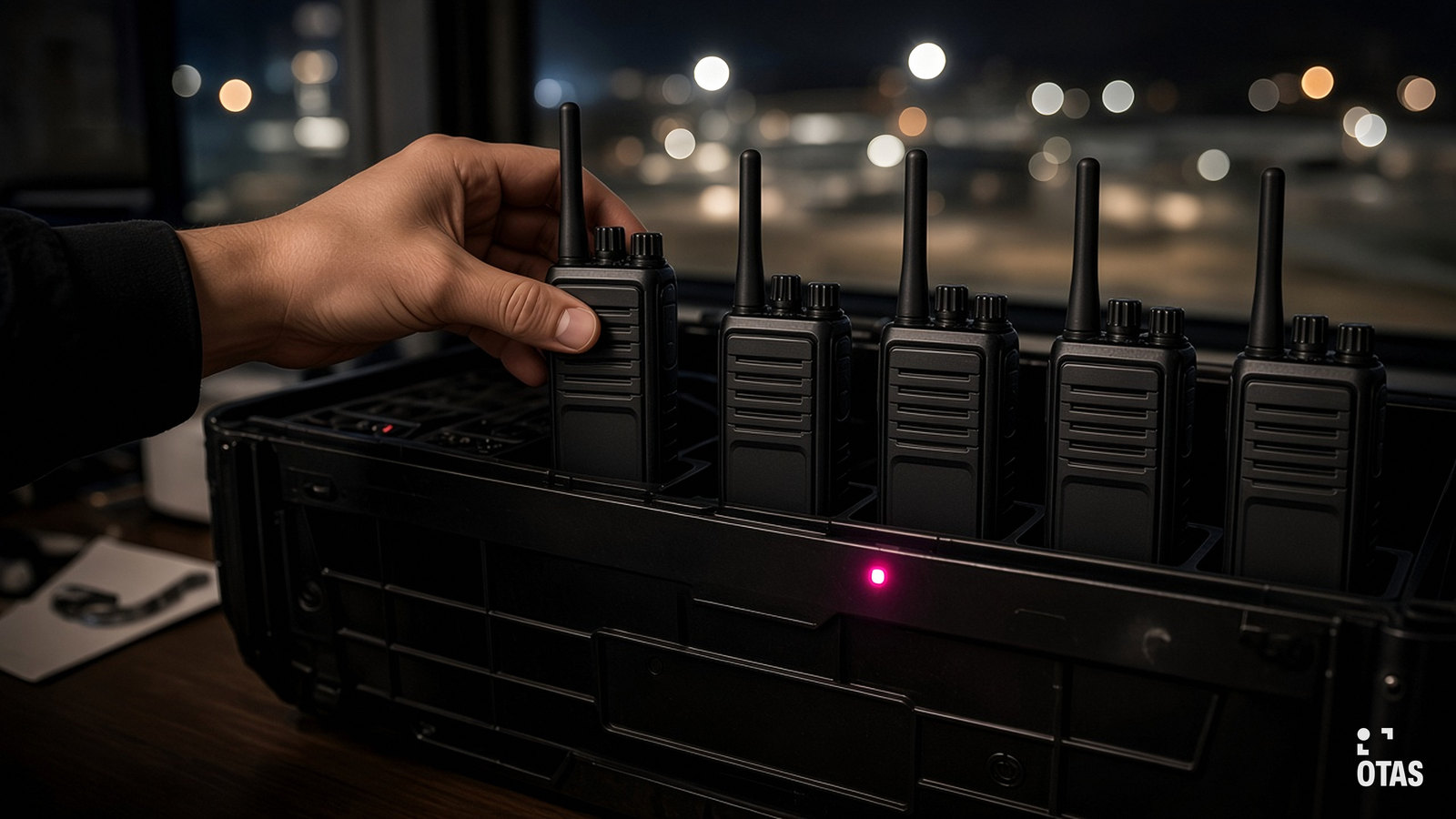
Six things to agree before the show
These are the six things to agree first. OTAS guidance unless a source is shown.
Before the show
- One running order Aircraft, drones, lasers and effects on one schedule, with times and heights [8].
- Launch points Every roof, tower and screen launch point marked against the flight path [8].
- The owner One named person who owns the sky at your event, working with the Flying Display Director [8].
- The stop The words for hold, who can call it and who releases it [17].
- The clear call A named aircraft spotter confirms the aircraft is clear, on the show channel.
- Notifications CAA notice for fireworks and lasers, and flying permission [7][10].
Signs your aircraft and effects are planned apart
Each of these is OTAS guidance, drawn from CAA guidance and the Seattle reports.
Signs aircraft and effects are planned apart
- 01Two running orders
The flying has one schedule and the effects have another [8].
- 02Launch points not mapped
Nobody has marked roof, tower or screen launch points against the flight path [8].
- 03Cues on the clock
Effects near the flyover fire on timecode, with no aircraft clear call.
- 04No hold call
Nobody has agreed the words for hold, or who can release it [17].
- 05Apart in rehearsal
The aircraft and the effects never rehearse at the real timings.
Plan one sky, from the first meeting to the show
Five stages. OTAS guidance unless a source is shown.
Five stages, from the plan to the night
One plan
Put every aircraft, drone, laser and aerial effect on one running order, with times, heights, launch points and safety radii [8]. Heights, safety distances and fall out areas come from the Display Operator, not the event team [17].
Owners
Name the Flying Display Director, the Display Operator for the effects and the show caller. Agree in writing who releases the hold [8][9].
Notify
Tell the CAA about fireworks and lasers at least 7 days ahead, earlier if you can [10]. Notify flypasts at least 14 days ahead, events with military aircraft displays at least 42 days ahead, and ask for any temporary restricted airspace at least 90 days ahead [30]. Talk to your safety advisory group.
Rehearse
Rehearse the effects with the aircraft timings. Test the hold call on the real radio channel, and check the Display Operator can stop a timecoded or automatic sequence at once when hold is called [17].
On the night
Fire effects near the flyover only when the named aircraft spotter has called the aircraft clear on the show channel. If the aircraft is late, early or still overhead, the effect holds.
The hold call
Agree the words before the show. Keep them short and the same every time. An effect already fired cannot be called back, so call hold early. OTAS guidance.
On the show channel
- "All effects, hold, hold, hold. Aircraft overhead."
- "Effects holding." Each firer answers back.
To release
- "Aircraft clear." Only the aircraft spotter says this.
- "Effects, stand by. Effects, go." Only the show caller says this.
When the flying side stops
- Any TERMINATE or STOP call on the flying side [8] means all effects hold at once.
- The Flying Display Director, or someone listening for them, must be on the show channel.
- If the show channel fails, all effects hold until it is back.
Roles when aircraft and effects share a show
Five roles, each with one named person. OTAS guidance, drawing on CAA guidance [8][9].
| Role | What they own |
|---|---|
| Flying Display Director | The safety of the flying, and stopping unsafe flying [8]. For a military flypast, name the military lead who does this job |
| Display Operator | The effects, their launch points and their heights [9]. Category 4 fireworks may only be used by professional display operators [18] |
| Show caller | The running order, and the release after the clear call |
| Aircraft spotter | Watches the aircraft and gives the clear call on the show channel, agreed with the Flying Display Director |
| Event organiser | The overall plan, the named owner of the sky, notifications and wider public safety [8][19] |
Table 3. Roles when aircraft and effects share a show. OTAS guidance.
Action box
Operational
- Know the hold call
- No clear call, no fire
- See it, call hold
If you fire or cue effects, know your hold call. Never fire near a flyover without the clear call. If you see an aircraft overhead, call hold.
Tactical
- One running order
- Hold the channel
- Release on clear
Run one running order for aircraft and effects. Hold the show channel. Release effects only on the aircraft clear call.
Strategic
- Name the owner
- Agree the stop
- Notify early
Name who owns the sky at your event. Agree the stop in writing with the Flying Display Director and the Display Operator. Make sure notifications are in.
One sky checklist
OTAS guidance unless a source is shown.
Before the day
- One running order for aircraft and effects.
- Launch points mapped against the flight path.
- Flying permission applied for, and CAA notice for fireworks and lasers [7][10].
- A named person who releases the hold.
Rehearsal
- Effects rehearsed at the aircraft timings.
- The hold call tested on the real channel.
On the night
- No effect near the flyover without the clear call.
- If in doubt, hold.
- A log of every hold and release.
What we do not know yet
- Whether any firework touched the aircraft. Contact has not been confirmed [5].
- Why the pyro fired while the aircraft was overhead. No official cause has been given.
- Who ran the effects and who called the show. This is not public.
- Whether any review is under way. None has been announced as of 3 November.
Coming up: fireworks season and winter events
Bonfire nights, switch ons and winter festivals put fireworks, drones and lasers into the sky across the UK through November and December. If any of them shares the sky with an aircraft, a drone show or a helicopter, the same plan applies [9][10].
Frequently asked questions
Does an airspace restriction protect our show?
It warns other pilots, and some restrictions cover drones only. Police and air ambulance helicopters can still fly low near your event [31][32]. It does not stop your own effects meeting your own aircraft. If any aircraft is overhead, effects hold [12][15][16].
Who decides whether the flying stops?
In the UK, the Flying Display Director must make sure unsafe displays are stopped [8]. Agree with them that any TERMINATE or STOP call holds all effects, and who releases them.
Can pyro fire during a flyover?
Only if it is planned with the flying. CAA guidance says the scale, heights, positions and timings of effects must be known and briefed, and every affected pilot must agree [8].
Do we need to tell the CAA about fireworks?
The CAA asks for at least 7 days' notice of fireworks and lasers, and fireworks must never be directed at aircraft [9][10].
Can aircraft and pyro share a show safely?
They can when they are one act. Integrated shows run on one clock with each element in its own block of sky [21]. In the UK, pyro on aircraft needs its own permission and a ground observer [8].
Did the pyro touch the helicopter in Seattle?
That has not been confirmed. Reports say pyro came very close, the aircraft held course and no injuries or damage were publicly reported [4][5].
Related OTAS Insights
These are links to other OTAS Insights pieces, not to any OTAS Live product or service.
Interest: OTAS Live Ltd, which publishes OTAS Insights, sells event operations services, handbooks and training related to this topic.
Law: this Insight summarises UK aviation and explosives law, CAA guidance, industry firework guidance and HSE guidance as published on 3 November 2026. US rules are background only. It is not legal advice. Ask the CAA, your Flying Display Director, your display operator and your safety advisory group what applies to your event.
References
Web sources opened 3 November 2026 and labelled by source type. Links are for checking only. Listing a source does not mean it endorses OTAS or has worked with OTAS.
- Home team video of the flyover before the game by four UH 60M Black Hawk helicopters, Week 8, 2 November 2026 seahawks.com
- Home team game day guide for the Week 8 game on Monday 2 November seahawks.com
- Local news blog report on low flying military helicopters, 26 October 2026 westseattleblog.com
- UK national newspaper report on a firework and a military helicopter at an NFL game, 3 November 2026 thesun.co.uk
- Brazilian national newspaper report on fireworks passing close to a military helicopter during an NFL game, 3 November 2026 oglobo.globo.com
- FAA, airspace restrictions over sports stadiums faa.gov
- Air Navigation Order 2016, article 86, flying displays legislation.gov.uk
- CAA, CAP 403 Flying Displays and Special Events, Edition 23, February 2026 caa.co.uk
- CAA, CAP 736 Operation of directed light, fireworks, toy balloons and sky lanterns within UK airspace caa.co.uk
- CAA, outdoor lasers, searchlights and fireworks caa.co.uk
- Air Navigation Order 2016, article 240, endangering safety of an aircraft legislation.gov.uk
- CAA regulatory library, UK SERA.5005 visual flight rules regulatorylibrary.caa.co.uk
- Rules of the Air Regulations 2015, Schedule 1, rule 5 legislation.gov.uk
- CAA, the Drone Code, where you can fly caa.co.uk
- Air Navigation Order 2016, article 239, restriction of flying regulations legislation.gov.uk
- UK Statutory Instrument 2026/907, a restriction of flying regulation for a festival legislation.gov.uk
- Explosives Industry Group, Working Together on Firework Displays, 2023 eig2.org.uk
- HSE, organising firework displays hse.gov.uk
- HSE, set clear roles and responsibilities hse.gov.uk
- Display team statement on its night display at a major motorsport weekend, 2024 aerosparx.com
- Royal Aeronautical Society, Painting the sky with colour, 17 September 2024 aerosociety.com
- Events industry awards entry for the 2025 motorsport weekend ceremonies beaworldfestival.com
- Ceremony producer credits for the motorsport weekend opening and closing ceremonies onthesly.com
- Air show agency social media post on the 2025 motorsport weekend, April 2025 pl.linkedin.com
- NTSB, final report WPR16FA183, night aerial pyrotechnic display, 2016 data.ntsb.gov
- NTSB, final report ERA19FA010, night aerobatic pyrotechnic display, 2018 data.ntsb.gov
- Air Navigation Order 2016, article 97, carriage of dangerous goods legislation.gov.uk
- Explosives Regulations 2014 legislation.gov.uk
- Explosives Act (Northern Ireland) 1970 legislation.gov.uk
- CAA, airspace notification of air displays and flypasts caa.co.uk
- CAA, ORS4 No.1526, general exemption for police flights from SERA minimum heights, 18 February 2022 caa.co.uk
- CAA, ORS4 No.1528, general exemption for air ambulance (HEMS) flights from SERA minimum heights and Visual Flight Rules, 21 February 2022 caa.co.uk
If an aircraft was late over your event tonight, who would stop the next pyro cue?
If you need support planning aircraft, drones or aerial effects into your event, reach out to us to see how we can support you.
OTAS Live Ltd · Correct as of
Download the PDFs
- The article: PDF, 20 pages, 4.2 MB
- The full report: PDF, 28 pages, 5.4 MB
- The slide deck: PDF, 24 pages, 1.7 MB
Work with OTAS
Planning aircraft or aerial effects?
Corrections to published Insights articles are listed in our corrections log.