
Download the PDFs
- The article: PDF, 23 pages, 3.5 MB
- The full report: PDF, 32 pages, 5.4 MB
- The slide deck: PDF, 26 pages, 1.2 MB
minutes, about, then the show carried on [1]
hours, nearly, to clear a ground [2]
lights, water, help in the pause [1]
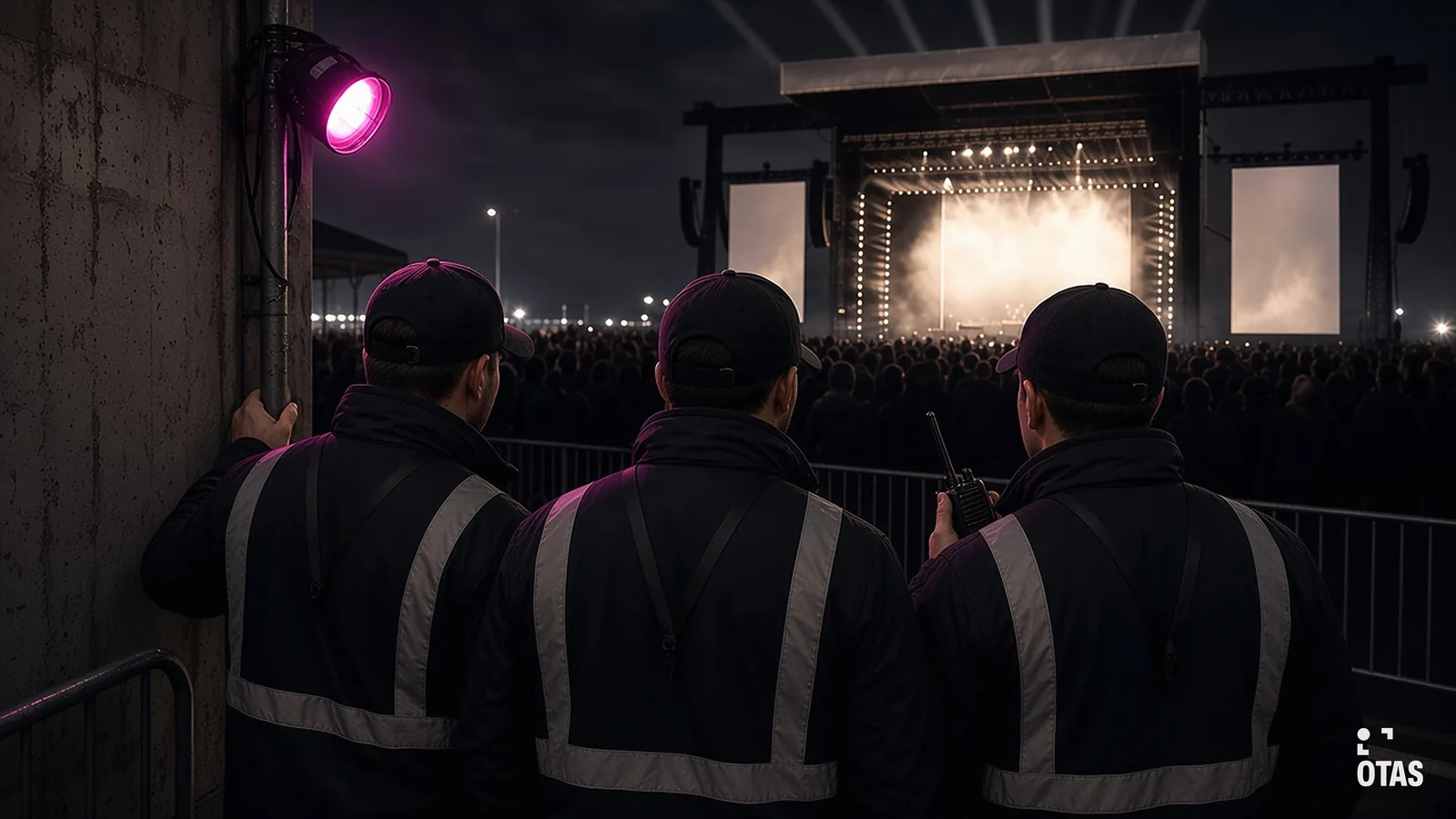
“Protect areas where people are vulnerable to crushing, eg in front of a stage.”
HSE, crowd controls inside the venue [4]
By OTAS Insights · Published by OTAS Live Ltd
On Friday 6 November 2026, a show at a UK arena was paused twice for medical incidents in the crowd [8]. An eyewitness said an announcement from the stage reported that four people in the standing area had collapsed, 360Wire reported [10]. The headline act later criticised the venue's medical and security response, and alleged that it took staff 12 minutes to bring out a defibrillator during one incident [8]. The venue had been approached for comment [8][9]. These are allegations, and we have not seen the venue's account. On 21 October, a few songs into a stadium concert in La Plata, Argentina, the music stopped [1]. People in the standing field had built up against the barrier in front of the stage [1]. The house lights came up, the crowd was asked from the stage to step back, water was handed out and fans with dizziness were taken out [1]. About ten minutes later the show carried on [1]. On the evening of Saturday 31 October in Bhagalpur, India, a crowd larger than the ground could hold broke through the barricades at a music event and rushed the stage [2]. The performers were taken to safety, the show was abandoned and it took police nearly two hours to clear the ground [2]. This Insight is about the show stop: a procedure your team plans, not a decision left to the stage on the night.
In short: a show stop works when everyone knows who calls it, what is said, what the lights and sound do, what the pit team does, and who agrees the restart. Plan it, brief it and rehearse the words before doors.
What was reported
Reports from each event, read on 9 November 2026 [1][2][8][9][10]. We describe venues and artists rather than naming them in the text. Some source links carry names.
A UK arena, 6 November
- Where A sold out arena show with a standing area, Yorkshire Live reported [9].
- What happened The show was paused during two separate medical incidents in the crowd, to let teams respond [8]. An eyewitness said an announcement from the stage reported four people in the standing area had collapsed [10].
- The pause The musicians left the stage while medical help was called, and came back once paramedics were confirmed to be arriving, 360Wire reported [10].
- Afterwards The headline act said the medical response did the audience “a complete injustice”, and alleged it took staff 12 minutes to bring out a defibrillator during one incident [8]. He also wrote that “no-one was properly hurt” [8].
- The venue The venue had been approached for comment [8][9]. We found no reply in the reports we read on 9 November 2026.
La Plata, 21 October
- Where A stadium concert in La Plata, Argentina, with a standing field in front of the stage [1].
- What happened A few songs in, people in the field built up against the barrier in front of the stage [1].
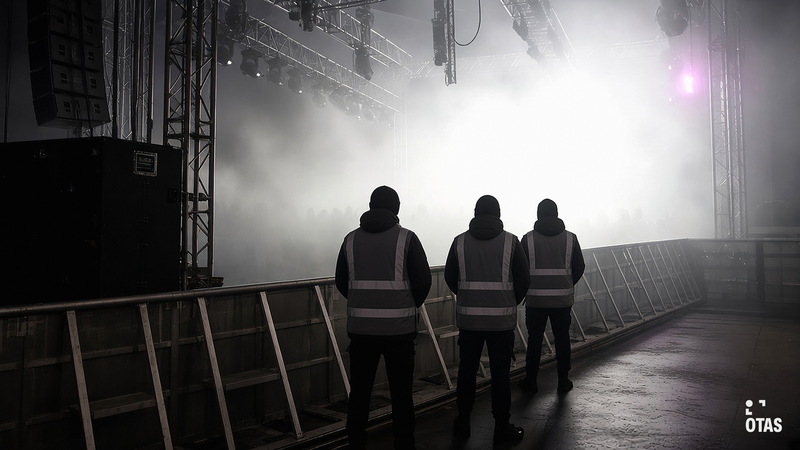
- The stop The music stopped, the house lights came up and the crowd was asked from the stage to step back, with translators and the big screens [1].
- The pause The message was repeated by the crowd control coordinators and medical staff. Water was handed out and fans with dizziness were taken out [1].
- The restart After about ten minutes, once space had been made at the front, the production allowed the show to restart [1].
Bhagalpur, 31 October
- Where A music event at an open ground in Bhagalpur, India, on Saturday evening [2].
- What happened The crowd was larger than the ground could hold. Soon after a popular song began, some people broke through the barricades and rushed the stage, and others followed [2].
- The outcome Chairs, shoes and stones were thrown at the stage. Security staff shielded the performers and took them away, and the show was abandoned [2].
- The police Police used batons to clear the ground [2]. It took nearly two hours. Several people, including police officers, were injured [2].
- The permission An official said the organisers had not obtained the required permission, so police were not deployed in enough numbers [2]. The official said legal action would be taken against the organisers [2].
More stops and near misses
Three more reports, from 2025 and 2026. We describe the events rather than naming them.
| Item | What was reported | What it shows |
|---|---|---|
| A festival in Chicago, July 2026 | The headline act paused after several fans near the front lost consciousness, and called for security at least three times [12]. Those at the front had likely been there since gates opened about ten hours before [12] | Heat and a long wait at the front add up |
| A free pop-up on a US campus, September 2026 | About 10,000 people came. Barriers collapsed soon after the gates opened, witnesses said, and the university said the organisers cancelled the show in consultation with the privately hired security [11] | A free event can draw far more than the space holds |
| A festival concert in Cuttack, India, November 2025 | A surge as the singer came on. The organisers paused the show until police managed the crowd. Two people who fainted were treated at first aid, then taken to hospital [13] | A pause can work, if someone calls it |
Table 3. Three more reports. NBC Chicago [12], WVLT [11], The Indian Express [13].
Two events, two outcomes
Side by side, as reported [1][2].
| Item | La Plata | Bhagalpur |
|---|---|---|
| The barrier | Held, with pressure on it [1] | Breached [2] |
| The stage | Stopped the music and spoke to the crowd [1] | Rushed. Performers taken to safety [2] |
| The pause | About ten minutes, water and help at the front [1] | The show was abandoned [2] |
| Afterwards | The show carried on [1] | Nearly two hours to clear the ground [2] |
Table 3. The two events side by side. minutouno [1], The Times of India [2].
What UK guidance says about the front of stage
In brief, from HSE event safety guidance [3][4][5][6] and the law. Not legal advice.
Expect the surge
- HSE says an audience may move forward as the main act comes on stage [4].
- It says to protect areas where people are vulnerable to crushing, for example in front of a stage [4].
- Crowd incidents can develop very quickly, HSE warns [4].
The barrier and the pit
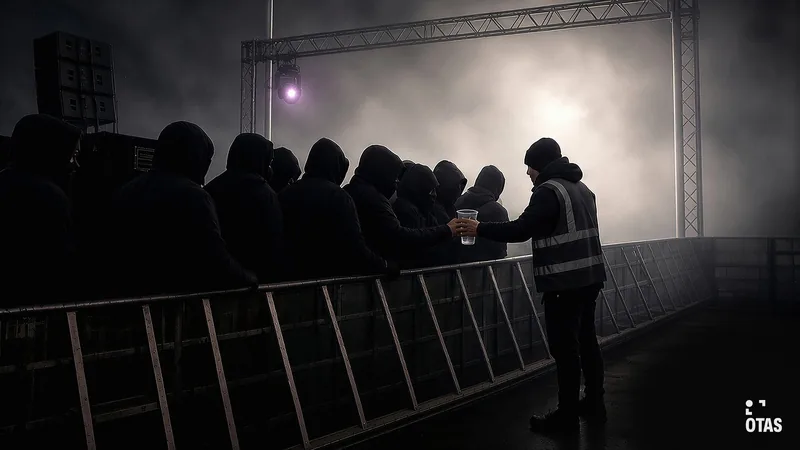
- HSE describes a front of stage barrier with a step on the stage side, used to offer water to the audience or to lift people out over the barrier [3].
- It describes a pit area behind the barrier for stewards and first aiders, with escape routes to the left and right of the stage [3].
The law [20][21]
- Employers must assess the risks to people affected by their work, including the audience [21].
- They must run their undertaking so the public is not exposed to risks to health or safety, so far as is reasonably practicable [20].
Watching and stopping
- Staff in or near the crowd can observe faces and spot signs of distress [5].
- HSE says to plan a control point, with back up loud hailers in case the PA fails [4].
- The organiser keeps overall responsibility for the safety of the public, and roles should cover both normal and emergency situations [6].
- HSE asks organisers to put crowd controls in place based on the risk [18], and to plan for incidents and emergencies [17][19].
HSE also says that where a barrier section is under pressure, it should have no access gates [3].
The medical side of a show stop
A stop gives the medical team time and space. Sources shown. The rest is OTAS guidance.
What the guidance says
- Defibrillators For every minute someone is in cardiac arrest without CPR and a defibrillator, their chance of survival falls by 10%, the Resuscitation Council UK says [14].
- Medical cover The Purple Guide says medical cover should fit the scale of the event and its activities, with at least a qualified first aider at any event [15].
What to plan
- Know where the nearest defibrillator is, and time the walk from there to the middle of the standing area.
- Agree the route medics use into the crowd, and who clears it.
- Put the medical lead on the same radio channel as the show caller.
The show stop script
Agree the words before doors, and give the same script to the stage, the screens and the PA. OTAS guidance.
The stop
- "We are going to stop for a moment. Everyone, please take two steps back."
- "Look after the people around you. If someone needs help, put your hand up."
- "We will start again as soon as the front is clear."
The restart
- "Thank you. Keep that space. Look after each other."
- Only after the named person has agreed the restart.
Why a show stop needs a plan
In La Plata the stop came from the stage, and the team around it backed it up [1]. The rest of this section is OTAS guidance, drawing on HSE.
A show stop, from first sign to restart
- Speed. Pressure at the front can build in seconds. If nobody knows who calls the stop, the time is lost asking. The Purple Guide says crowd planning covers how people move around the site, and how they leave in an emergency [16].
- One voice. The crowd listens to the stage. A stop works best when the words from the stage match the screens, the PA and the pit.
- The pause has a job. A pause is time for the pit team to give water, help people out and let the front breathe [1][3].
- The restart. Restarting too soon can bring the surge straight back. Someone needs to check the front first.
- No barrier, no stop. In Bhagalpur the barricades failed and the stage was rushed [2]. A show stop needs a barrier and a crowd that fits the space.
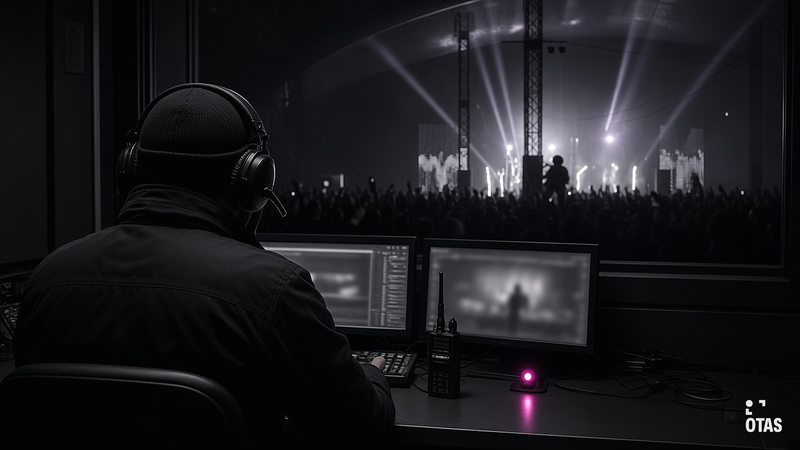
Six things to agree with the stage
These are the six things to agree first. OTAS guidance unless a source is shown.
Before doors
- Who calls The named people who can call a stop [6].
- The line A direct radio or talkback route from the pit to the show caller.
- The words The stop and restart script, agreed with the artist team.
- The cues Music off, house lights up, effects and pyrotechnics stopped, the script on screens and the PA. OTAS guidance, drawing on the La Plata stop [1].
- The pit Water ready, the step behind the barrier clear, first aid on hand [3].
- The restart Who checks the front, and who agrees the restart.
Signs the front of stage needs a stop
Signs 1 to 3 draw on the reports and on HSE. Signs 4 and 5 are OTAS guidance.
Signs the front needs a stop
- 01People pressed on the barrier
The front rows are pushed hard against the barrier and cannot step back [1][3].
- 02Faces in distress
People look pale, faint or distressed, or hold their hands up for help [1][5].
- 03People being lifted out
The pit team is lifting more and more people over the barrier [3].
- 04The crowd sways
The crowd moves in waves, and people fall or lose their footing.
- 05Pit calls go unanswered
The pit team cannot get through to control or the stage over the noise.
Plan the show stop before doors
Five stages, from the planning meeting to the restart. OTAS guidance unless a source is shown.
Five stages, from the plan to the restart
Plan
Write the show stop procedure into the event safety plan. Name who can call it and who agrees the restart [6].
Brief
Brief the artist team, stage manager, show caller, lighting, sound, screens and the pit team on the same words and cues.
Stop
On the call: music off, house lights up, effects and pyrotechnics stopped, one message from the stage, the same on the screens and the PA [1].
Help
The trained pit team gives water, lifts people out over the barrier and passes them to first aid [1][3].
Restart
The named person checks the front with the pit supervisor, then agrees the restart with the stage.
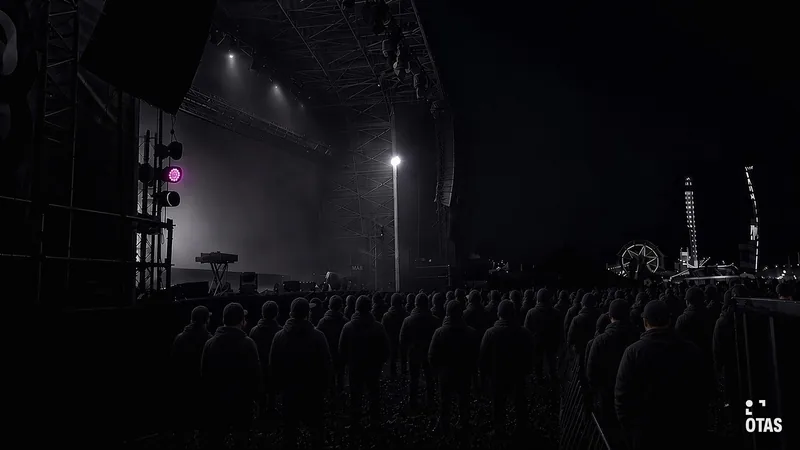
When the barrier is not enough
The Bhagalpur report shows what can follow when a crowd is larger than the ground can hold and the barricades are breached [2]. OTAS guidance.
Plan first
- Capacity Know how many the standing area can hold, and stop entry when it is full.
- Barrier Use a barrier built for front of stage, with a pit behind it [3].
- Competent person A competent person should check the barrier design, loading and build, and the standing capacity. HSE points to Institution of Structural Engineers guidance on temporary demountable structures for the barrier [3].
- Permission Hold the licences and agreements the event needs, and share the plan with the police.
On the night
- Stop the show early, before the barrier is tested.
- Keep the escapes to the left and right of the stage clear, so people at the front can move away to safety [3].
- If the barrier fails, protect people first, then the stage.
Roles in a show stop
Four roles, each with one named person. OTAS guidance, drawing on HSE [6].
| Role | What they own |
|---|---|
| Event safety officer | The decision to stop and to restart |
| Pit supervisor | Spotting the build up and checking the front |
| Show caller | The cues to sound, lights, screens and the stage |
| Artist liaison | The script on stage, agreed before doors |
Table 4. Roles in a show stop. OTAS guidance.
Action box
Operational
- Watch faces
- Call it in
- Water and help
Watch faces at the front. Call pressure in with the agreed words. During a stop, give water, and if you are trained in the pit, help people out over the barrier and pass them to first aid.
Tactical
- Keep the line open
- Run the cues
- Check the front
Keep the line from the pit to the show caller open. When a stop is called, run the cues. Check the front with the pit supervisor before any restart.
Strategic
- Write the procedure
- Agree with artists
- Name who calls
Write the show stop procedure into the plan. Agree it with the artist team and the promoter. Name who calls a stop and who agrees the restart.
The show stop checklist
OTAS guidance unless a source is shown.
Before doors
- A written show stop procedure, agreed with the artist team.
- Named people who call a stop and agree the restart.
- A tested line from the pit to the show caller.
- The script loaded on the screens.
During the show
- Pit team watching faces at the front [5].
- Water ready behind the barrier [3].
- First aid ready to take people from the pit.
After
- A log of any stop, its length and the restart.
- A short debrief with the pit team and the stage [7].
What we do not know yet
- What happened in the two medical incidents at the UK arena, and the venue's account. The venue had been approached for comment [8][9].
- How the stage and the production spoke to each other before and during the La Plata stop.
- How many people the Bhagalpur ground was meant to hold, and how many came.
- What the legal action against the Bhagalpur organisers will find.
Coming up: arena and club season
Arena tours, club nights and Christmas shows run across the UK through December. Many have standing areas in front of the stage. HSE says audiences may move forward as the main act comes on [4]. Agree your show stop before the tour reaches you.
Frequently asked questions
Who should be able to call a show stop?
A small number of named people, usually the event safety officer and the pit supervisor, with the show caller running the cues. Agree with the artist team before doors that if anyone named sees people in immediate danger, the stop happens at once and is confirmed afterwards.
What should the artist say?
Short, calm words agreed in advance: stop, step back, look after the people next to you. The same words on the screens and the PA [1].
How fast should the medical response be?
As fast as you can make it. For every minute without CPR and a defibrillator, the chance of survival falls by 10% [14]. Time the route from your defibrillator to the standing area, and plan it into the show stop.
What does the pit team do during the pause?
The trained pit team gives water, lifts people out over the barrier and passes them to first aid, as HSE describes [3].
How long should a stop last?
As long as it takes to clear the front. In La Plata it was about ten minutes [1]. The restart is agreed only after a check.
What if there is no barrier or the barrier fails?
Then a show stop alone will not keep people safe. In Bhagalpur the barricades were breached and the stage was rushed [2]. Plan the barrier and the capacity first.
Related OTAS Insights
These are links to other OTAS Insights pieces, not to any OTAS Live product or service.
- Irritant spray in the crowd: the first five minutes
- Christmas lights switch-ons: a capacity without a turnstile
Interest: OTAS Live Ltd, which publishes OTAS Insights, sells event operations services, handbooks and training related to this topic.
Law: this Insight summarises HSE and Purple Guide guidance and the Resuscitation Council UK. It also summarises parts of the Health and Safety at Work etc. Act 1974 and the Management of Health and Safety at Work Regulations 1999, which apply in Great Britain. Northern Ireland has its own equivalent law. It is not legal advice. Ask your council, the police and your safety advisory group what applies to your event.
References
Web sources opened 9 November 2026 and labelled with their publisher.
- minutouno, show paused in La Plata because of crowd pressure on the barriers, 21 October 2026 minutouno.com
- The Times of India, several injured as music show turns violent in Bhagalpur, 2 November 2026 timesofindia.indiatimes.com
- HSE, stage barriers hse.gov.uk
- HSE, crowd controls inside the venue hse.gov.uk
- HSE, crowd management, monitoring hse.gov.uk
- HSE, set clear roles and responsibilities, updated 4 April 2025 hse.gov.uk
- HSE, crowd management, assess the risks hse.gov.uk
- The Star, headline act criticises an arena's response to two medical incidents, 7 November 2026 thestar.co.uk
- Yorkshire Live, headline act says crowd emergencies stopped an arena gig, 8 November 2026 examinerlive.co.uk
- 360Wire, paramedics called to an arena during a concert, 6 November 2026 jusmedia.co.uk
- WVLT, free campus concert shut down after a crowd surge, 25 September 2026 wvlt.tv
- NBC Chicago, headline act pauses festival show after several fans pass out, July 2026 nbcchicago.com
- The Indian Express, stampede like situation at a festival concert in Cuttack, two fainted, November 2025 indianexpress.com
- Resuscitation Council UK, defibrillation resus.org.uk
- The Purple Guide, medical thepurpleguide.co.uk
- The Purple Guide, crowd management thepurpleguide.co.uk
- HSE, managing crowds safely hse.gov.uk
- HSE, event safety, put crowd controls in place hse.gov.uk
- HSE, running an event safely hse.gov.uk
- Health and Safety at Work etc. Act 1974, section 3, duties to persons other than employees legislation.gov.uk
- Management of Health and Safety at Work Regulations 1999, regulation 3, risk assessment legislation.gov.uk
If the front of stage built up at your next show, who would call the stop, and how would the stage hear it?
If you need support with a show stop procedure or front of stage planning, reach out to us to see how we can support you.
Events industry since 2008, internationally since 2015. OTAS Live Ltd. By OTAS Insights. Edited by Kris Dailly.
Download the PDFs
- The article: PDF, 23 pages, 3.5 MB
- The full report: PDF, 32 pages, 5.4 MB
- The slide deck: PDF, 26 pages, 1.2 MB
Work with OTAS
Running a standing show this season?
Corrections to published Insights articles are listed in our corrections log.