
Download the PDFs
- The article: PDF, 19 pages, 3.4 MB
- The full report: PDF, 30 pages, 4.4 MB
- The slide deck: PDF, 24 pages, 1.3 MB
fireworks calls on Halloween night [1]
officers injured in 2023 [4]
control zones in Edinburgh [5]
“We have again experienced incidents of fireworks used as projectiles at buildings, vehicles and members of the public.”
The officer in charge of the operation, Police Scotland, after Halloween night [1]
By OTAS Insights · Published by OTAS Live Ltd
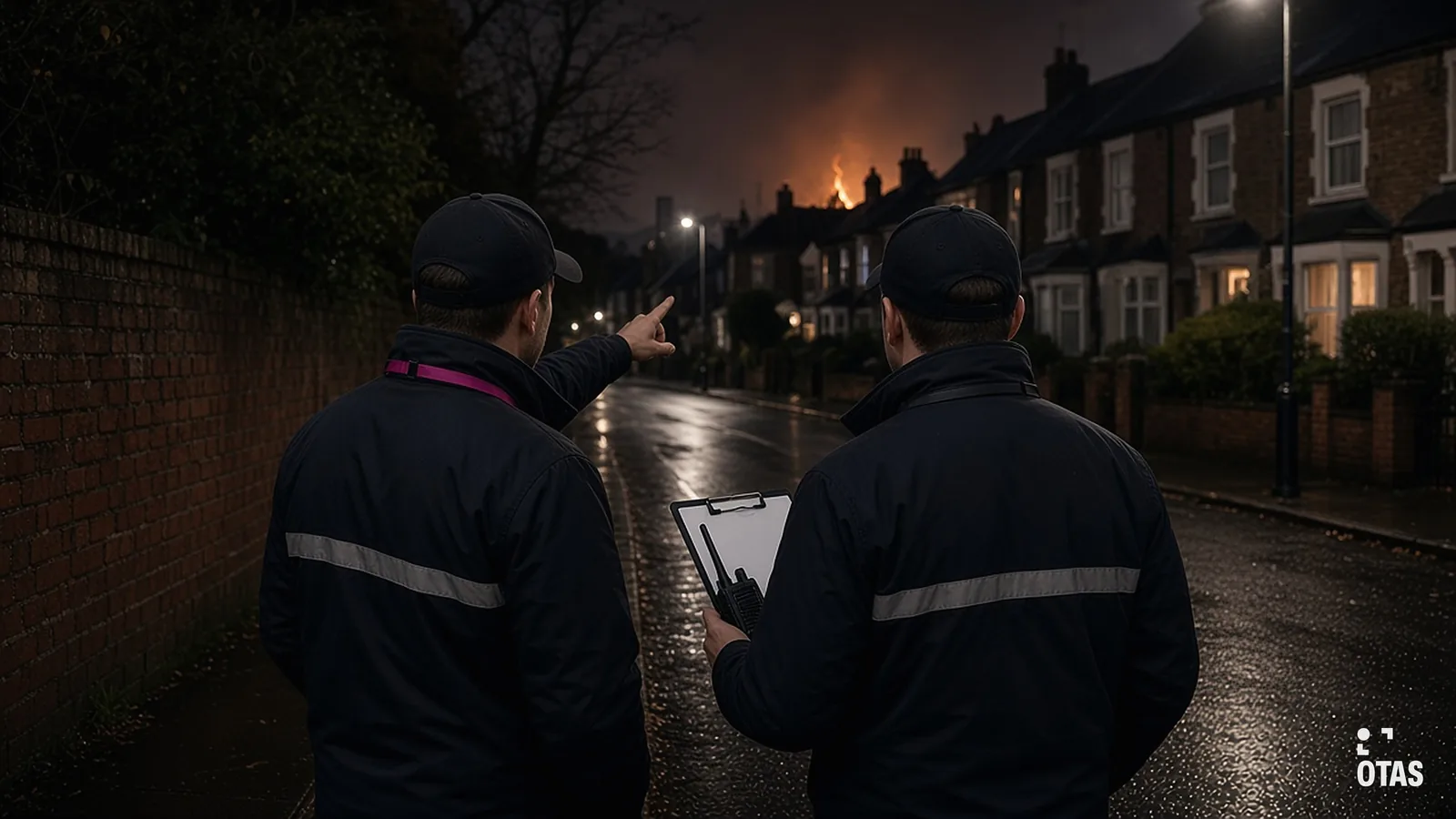
Halloween night in Scotland brought 144 calls about fireworks to Police Scotland, down from 160 in 2025, a fall of 10 per cent [1][2]. Fireworks were still lit in the street, and some were thrown at members of the public in Tranent, Bonnyrigg and Glasgow [1]. Operation Moonbeam, now in its ninth year, runs to the evening of Thursday 5 November [2]. Edinburgh has Firework Control Zones in 14 areas and Glasgow has four [2][5][8]. For a licensed display the risk is rarely the show itself. It is the walk in, the streets around the site and the walk home. This Insight sets out what the sources say, and what event teams can do this week.
In short: the numbers are falling, but fireworks are still being thrown in the street. Plan the walk in and the walk home as carefully as the show, know whether your site sits in a control zone, and make sure your display operator can evidence the professional exemption.
What happened on Halloween night
Police Scotland published its figures after Halloween night. BBC News and STV News reported the same numbers [1][2][3].
The night in figures
- Calls 144 calls relating to fireworks on Saturday 31 October, compared with 160 in 2025, a reduction of 10 per cent [1].
- Dispersal Seven Dispersal Orders were issued in Edinburgh [1].
- Control zones There were no charges for breaches of Firework Control Zones on the night [1].
- Officers There were no reports of officers in the operation being injured [1].
What police described
- In the street In Tranent, Bonnyrigg and Glasgow, fireworks were lit in the street and some were thrown at members of the public [1].
- As projectiles The officer in charge of the operation said fireworks were again used as projectiles at buildings, vehicles and members of the public [1].
- Public order Police said there were no offences that required a specific public order response [1].
- Confirmed BBC News and STV News reported the same figures the next morning [2][3].
Operation Moonbeam in figures
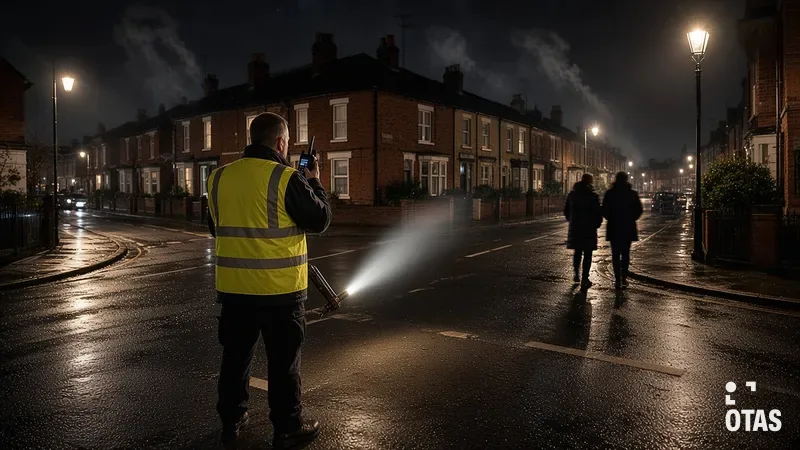
Police Scotland gave these figures at the launch of this year's operation on 21 October 2026 [4].
Supply is falling in Edinburgh
- Fireworks retailers in the city fell from 33 in 2024 to two in 2025, the council said [6].
| Year | Police report |
|---|---|
| 2023 | Unprecedented violence directed at emergency services. 62 officers injured [4] |
| 2024 | One officer injured [4] |
| 2025 | No officer injuries, and an almost 37 per cent reduction in emergency calls relating to fireworks offences [4] |
| After the 2025 campaign | More than two tonnes of fireworks seized, and 24 people charged with offences [4] |
| Halloween 2026 | 144 calls, down 10 per cent on 2025 [1] |
Table 2. Operation Moonbeam figures, from Police Scotland [1][4].
The trend is down. But the Halloween report shows fireworks were still used as projectiles [1]. A falling number is not a reason to plan less.
Control zones: the law, the dates and the penalties
In brief, and not legal advice. Scotland only.
What the 2022 Act says
- It is an offence to ignite a firework in a Firework Control Zone, or to knowingly or recklessly throw or fire one into it [11].
- The control zone rules relate to F2, F3 and F4 fireworks [11].
- On summary conviction the penalty is up to six months in prison, a level 5 fine, or both [11].
This year in Edinburgh
- Firework Control Zones in 14 areas of the city, from 30 October to 8 November 2026 [5][6].
- Agreed at the council's Culture and Communities Committee on Monday 8 June 2026 [6].
- The 14 areas are Balerno, Calton Hill, Corstorphine, Gracemount, Liberton, Lochend, Longstone, Moredun, Niddrie, Seafield, Sighthill/Broomhouse, Stenhouse/Gaskill, West Pilton and Wester Hailes [7].
This year in Glasgow
- Four zones: Govanhill and Pollokshields as one zone, Broomhouse, Pollok and Glasgow Harbour, from 30 October to 9 November [8].
- The council says offenders can be jailed for up to six months and fined up to £5000 [8].
General rules in Edinburgh
- Adult fireworks may be used in private places only, between 18:00 and 23:00, or to midnight on 5 November, the council says [5].
- The council and the fire service both encourage people to go to organised displays [5][7].
Your licence
- A licensing authority in Scotland may attach conditions to a public entertainment licence, including conditions "limiting the number of persons to be admitted" [16].
- Check your conditions before the night, and plan your entry and exit to meet them.
Zone maps are on the council pages [5][8] and the fire service page [7]. Check them against your site plan, your car parks and the routes your crowd will use.
The professional operator exemption
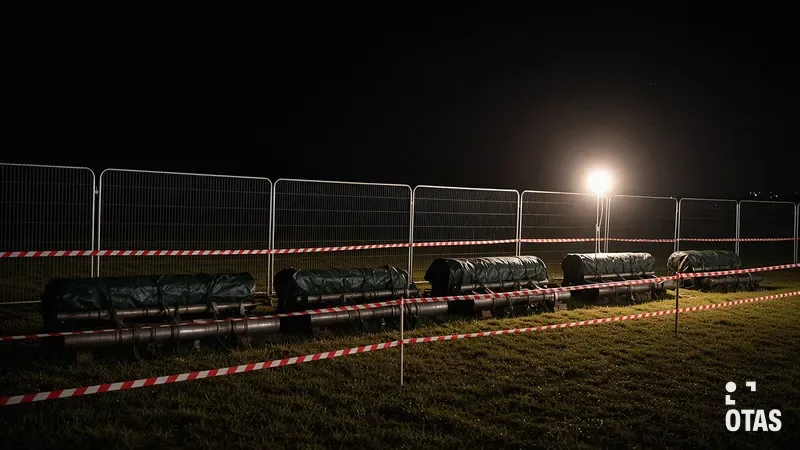
Schedule 1 to the 2022 Act sets out when the control zone offence does not apply [11].
The Act sets out when it is not an offence under section 27(2)(a) for a person to ignite a firework in a firework control zone [11]. That applies if the person is "employed by, or in business as, a professional organiser or operator of fireworks displays" and the firework is for "a public fireworks display" [11].
This part of the Act has been in force since 22 June 2023 [11].
The exemption covers the person firing the display. It does not cover a member of the public who sets off fireworks in the same zone on the way to or from your show. That is our reading of the Act, not legal advice.
What to hold in the event file (OTAS guidance)
- Written confirmation that your operator is employed by, or in business as, a professional display operator.
- A copy of their insurance.
- The firing area plan and the cordon agreed with the operator.
- The name of the operator lead on the night, and how to reach them.
Dispersal zones: what police can do
Police can direct people who do not live in an area to leave it and not to return for up to 24 hours [10]. Check the details with your local police contact.
Police Scotland set a Dispersal Zone in Pollokshields in Glasgow between 31 October and 6 November [9]. Under section 21(3)(c) of the Antisocial Behaviour etc. (Scotland) Act 2004, a direction not to return to the area can be given to people who do not live there [10]. The direction lasts for a period "not exceeding 24 hours" [10].
Under the Antisocial Behaviour etc. (Scotland) Act 2004, an officer of at least superintendent rank can authorise these powers [10]. This applies where groups of "two or more persons" are causing alarm or distress, and antisocial behaviour is "significant, persistent and serious" [10].
Ask your police contact how the zone will run on the night before you brief stewards.
Seven Dispersal Orders were issued in Edinburgh on Halloween night [1].
What it means for your event (OTAS guidance)
- A dispersal zone near your site can move groups off your walking routes. Know where it starts and ends.
- Stewards do not use these powers. Dispersal is a police matter.
- Ask police whether a zone will be in place on the night of your display.
Pyrotechnics in the crowd: possession and designated events
The 2022 Act also covers pyrotechnics carried in public places, and at some venues and events [11].
What the Act covers
- It is an offence to possess a pyrotechnic article in a public place without reasonable excuse [11].
- Sections 36 and 37 cover designated venues and events, including music events, where possession of pyrotechnics is prohibited [11].
- Using a firework against an emergency worker is an aggravation of an offence [11].
If your event is not designated (OTAS guidance)
- Your conditions of entry carry the ban.
- Your search policy and signs say "no fireworks, flares or smoke".
- Your search is sized so queues do not cause crowding. HSE says search procedures must not compromise safety by creating an overcrowding risk [13].
Where the risk sits: outside the gate
Police describe fireworks lit and thrown in the street [1]. Streets are where display crowds walk. The rest of this section is OTAS guidance, drawing on HSE.
Where the risk sits on display night
- The approach. People walk to a display through the same streets where fireworks are set off. Stewards at the gate cannot see the approach.
- The street. Fireworks were thrown at buildings, vehicles and members of the public on Halloween night [1]. A queue on a pavement is a crowd in the street.
- The finale. When the show ends, everyone leaves at once. HSE treats leaving the site and dispersal as one of three phases to plan [13].
- The walk home. HSE notes people may become disorientated if they arrive in the light and leave in the dark, and says to make sure there is enough lighting [12].
- The mood online. HSE says monitoring social media can give useful up to date information on a crowd's mood [14]. It can also show a gathering forming near your site.
Six actions before your display
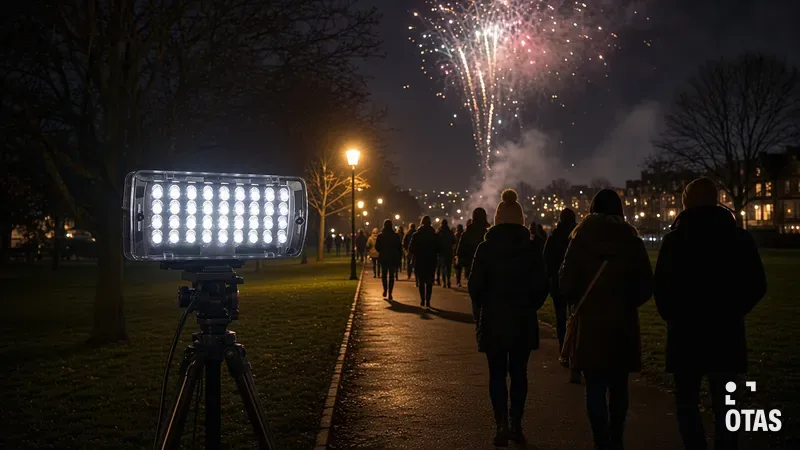
These are the six things to do first, before your display. OTAS guidance unless a source is shown.
Before your display
- Maps Check the council zone maps against your site, car parks and walking routes [5][7][8].
- Operator Get written confirmation of your operator's professional status, and their insurance, for the event file [11].
- Police Call your local police contact. Ask about hotspots, dispersal zones and who to call on the night [1].
- Trigger Agree a hold or stop trigger if anything is thrown at the crowd, and name who calls it.
- Approach Put stewards on the approach routes, on the same radio channel as your control point.
- Exit Plan a staggered exit with music after the finale, lit routes, and stewards on the routes for 30 minutes.
Signs trouble is building outside
Signs 1 and 2 come from the police report. Signs 3 to 5 are OTAS guidance.
Warning signs near the site
- 01Fireworks lit in the street
Fireworks were lit in the street in Tranent, Bonnyrigg and Glasgow on Halloween night [1].
- 02Anything thrown towards people
Police said fireworks were used as projectiles at buildings, vehicles and people [1].
- 03Groups gathering near the site
Groups forming on approach routes or at transport points as the show starts.
- 04Posts about meeting nearby
Social media posts that point to a gathering near your display.
- 05Bangs or smoke off site
Fireworks going off in the streets around the site before or after your show.
Plan the approach, the show and the dispersal
Five stages, from this week to the walk home. OTAS guidance unless a source is shown.
Five stages, from this week to the walk home
This week
Call your local police contact about Moonbeam contacts, hotspots and dispersal zones [1]. Check the zone maps [5][7][8]. Get your operator's exemption evidence and insurance on file [11].
The site plan
Mark control zones, dispersal zones, transport points and the routes your crowd will use. Add lighting on exit routes [12].
Doors and the approach
Stewards on the approach routes, not only at the gate. Radios on the same channel as the control point. Search for pyrotechnics, sized so queues do not cause crowding [13].
The show
The event safety officer owns hold and stop calls. Agree the trigger with police before doors. Watch social media for gatherings near the site [14].
The exit and after
A staggered exit with music after the finale. Stewards on the walking routes for 30 minutes. Log incidents, times and police reference numbers.
If something is thrown at the crowd
A projectile response, agreed before doors. OTAS guidance unless a source is shown.
The four steps
- Stop The event safety officer calls a hold on the show if a firework or object is thrown towards the crowd.
- Move people back Stewards move people away from the area calmly, with clear instructions on the PA.
- Report Report the location and a description to the control point and to police, on the agreed channel.
- Preserve Preserve CCTV and note the times. Add it all to the post event log.
Agree with police before doors
- What counts as a trigger for a hold or a stop.
- Who calls it, and who tells police.
- How and when the show restarts, and who decides.
HSE lists "Dangerous behaviour, such as climbing onto equipment/structures or throwing objects" among the crowd hazards to assess [12].
Medical and welfare
Fireworks in the street mean burns and eye injuries are possible on the approach as well as on site. OTAS guidance.
In the medical plan
- Burns and eye injury capability, with the right kit at each treatment point.
- A way to reach casualties on the approach routes, not only inside the site.
- A welfare point near the exit for people who are lost or separated.
- A record of every treatment, with times and locations, for the post event log.
Roles on the night
Four roles, each with one named person. OTAS guidance.
| Role | What they own |
|---|---|
| Event safety officer | Hold and stop calls |
| Police liaison | The single point of contact with the local Moonbeam commander |
| Route supervisors | One for each main approach, with stewards and radios |
| Display operator lead | The exemption evidence and the firing area cordon |
Table 4. Roles on display night. OTAS guidance.
Action box
Operational
- Report with location
- Move people back
- Leave groups to police
Know who you report to. If a firework is lit or thrown near the crowd, move people back calmly and report the location and a description. Do not challenge groups. That is a police matter.
Tactical
- Stewards on approaches
- One radio channel
- Stagger the exit
Put stewards on the approach routes. Brief the five signs and the projectile response. Keep radios on one channel. Stagger the exit and keep stewards out for 30 minutes.
Strategic
- Check zone maps
- Hold operator evidence
- Agree the stop trigger
Check the zone maps. Hold your operator's exemption evidence. Agree the hold and stop trigger with police. Name the four roles for the night.
The display night checklist
OTAS guidance unless a source is shown.
Before the night
- A call with local police about Moonbeam contacts, known hotspots and dispersal orders [1].
- A map with control zones, dispersal zones, transport points and the routes your crowd will use.
- The operator's exemption evidence and insurance in the event file [11].
- "No fireworks, flares or smoke" in your conditions of entry and on your signs.
On the night
- Stewards on the approach routes, not only at the gate.
- Radios on the same channel as the control point.
- A search at entry for pyrotechnics, sized so queues do not cause crowding [13].
- Burns and eye injury capability in the medical plan.
- Social media monitoring for gatherings near the site [14].
- Lighting on exit routes [12].
After the night
- A post event log of incidents, times and police reference numbers.
- A short debrief with police, the operator and route supervisors.
What we do not know yet
- How many calls there will be on 5 November, and where.
- The full figures for this year's operation.
- Whether any display this season will be stopped because of projectiles.
Coming up: the rest of the bonfire season
Edinburgh's zones run to 8 November and Glasgow's to 9 November [6][8]. If your display falls on the weekend, the same plan applies. The Purple Guide lists a chapter on fireworks [15].
Frequently asked questions
Can a display be fired inside a control zone?
Yes, in the circumstances the Act sets out. Igniting a firework in a control zone for a public fireworks display is not an offence for some people [11]. They are people employed by, or in business as, a professional organiser or operator of fireworks displays [11]. Hold their evidence in your event file.
Should stewards deal with people setting off fireworks outside?
No. Igniting a firework in a control zone is an offence [11], and it is a police matter. Stewards report the location and a description, and move people back.
How long can police direct someone away from a dispersal zone?
Under section 21(3)(c) of the 2004 Act, a direction not to return can be given to people who do not live in the area, and lasts for a period "not exceeding 24 hours" [10]. Ask your police contact how the zone will run on the night.
Does a fall in calls mean less risk this year?
Calls fell 10 per cent on Halloween night [1]. But police said fireworks were again used as projectiles [1]. Plan as if it could happen near your site.
Do we need to search for fireworks at the gate?
Possessing a pyrotechnic article in a public place without reasonable excuse is an offence [11]. If your event is not designated under the Act, your conditions of entry carry the ban. Size your search so queues do not cause crowding [13].
Related OTAS Insights
These are links to other OTAS Insights pieces, not to any OTAS Live product or service.
- When a rumour moves faster than your stewards
- When a social post draws a crowd: pop-up events without a plan
Interest: OTAS Live Ltd, which publishes OTAS Insights, sells event operations services, handbooks and training related to this topic.
Law: this Insight summarises parts of Scottish law as published on legislation.gov.uk. It is not legal advice. Ask your council and the police what applies to your event, and take advice.
References
Web sources opened 2 November 2026 and labelled with their publisher.
- Police Scotland, police praise public spirit during Halloween 2026, 31 October 2026 scotland.police.uk
- BBC News, Halloween fireworks calls in Scotland, 1 November 2026 bbc.co.uk
- STV News, fireworks thrown at people, buildings and vehicles, 1 November 2026 news.stv.tv
- Police Scotland, launch of Operation Moonbeam 2026, 21 October 2026 scotland.police.uk
- City of Edinburgh Council, Firework Control Zones edinburgh.gov.uk
- City of Edinburgh Council, news, Firework Control Zones for 2026 edinburgh.gov.uk
- Scottish Fire and Rescue Service, organised firework events firescotland.gov.uk
- Glasgow City Council, Firework Control Zones confirmed for four Glasgow communities glasgow.gov.uk
- Police Scotland, dispersal zone in Pollokshields over Halloween and Bonfire Night, October 2026 scotland.police.uk
- Antisocial Behaviour etc. (Scotland) Act 2004, legislation.gov.uk legislation.gov.uk
- Fireworks and Pyrotechnic Articles (Scotland) Act 2022, legislation.gov.uk legislation.gov.uk
- HSE, crowd management, assess the risks hse.gov.uk
- HSE, crowd management, controls hse.gov.uk
- HSE, crowd management, monitoring hse.gov.uk
- The Purple Guide, chapter list thepurpleguide.co.uk
- Civic Government (Scotland) Act 1982, section 41, legislation.gov.uk legislation.gov.uk
If a firework was thrown at your queue on the night, who would call the hold?
If you need support with crowd, route and stewarding plans for a fireworks display, reach out to us to see how we can support you.
OTAS Live Ltd · Correct as of
Download the PDFs
- The article: PDF, 19 pages, 3.4 MB
- The full report: PDF, 30 pages, 4.4 MB
- The slide deck: PDF, 24 pages, 1.3 MB
Work with OTAS
Running a fireworks display this week?
Corrections to published Insights articles are listed in our corrections log.